
Planning a family trip to Paris and London is exciting. Packing for it? That’s where things can get complicated, especially when your child gets overwhelmed by too many choices. To help with this, I found a visual guide for kids to pack that makes the process easier.
My daughters love clothes and fashion, but when it comes time to actually pack, having endless options can quickly become stressful for my older one. What starts as excitement often turns into worrying about whether she’s choosing the “right” outfit for each day. If you’ve ever watched a child freeze in front of a closet full of clothes, you know exactly what I mean. It becomes an immediate meltdown as if I’m having her choose a face tattoo.
For our recent Paris and London adventure, I decided to try something different.
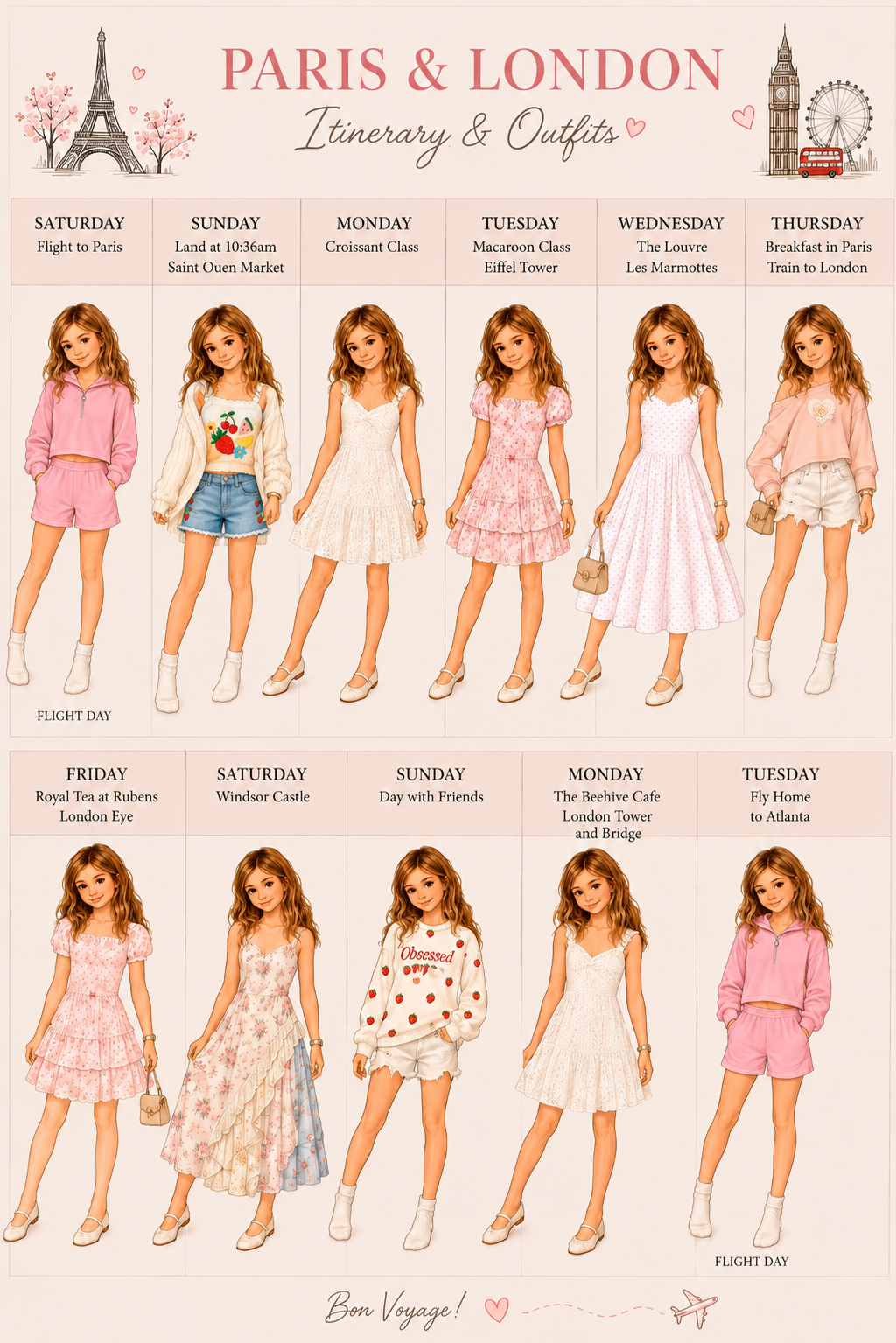
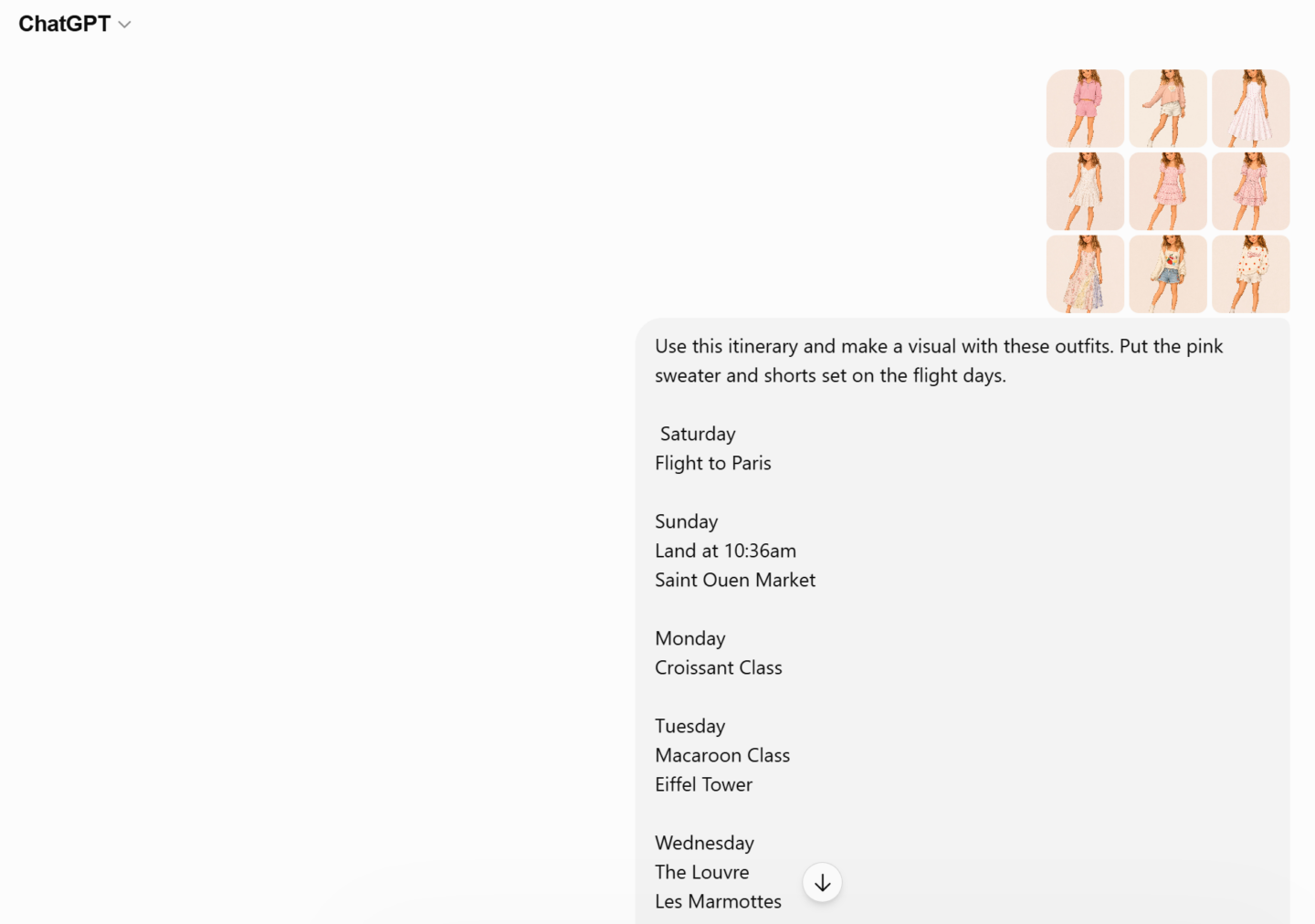
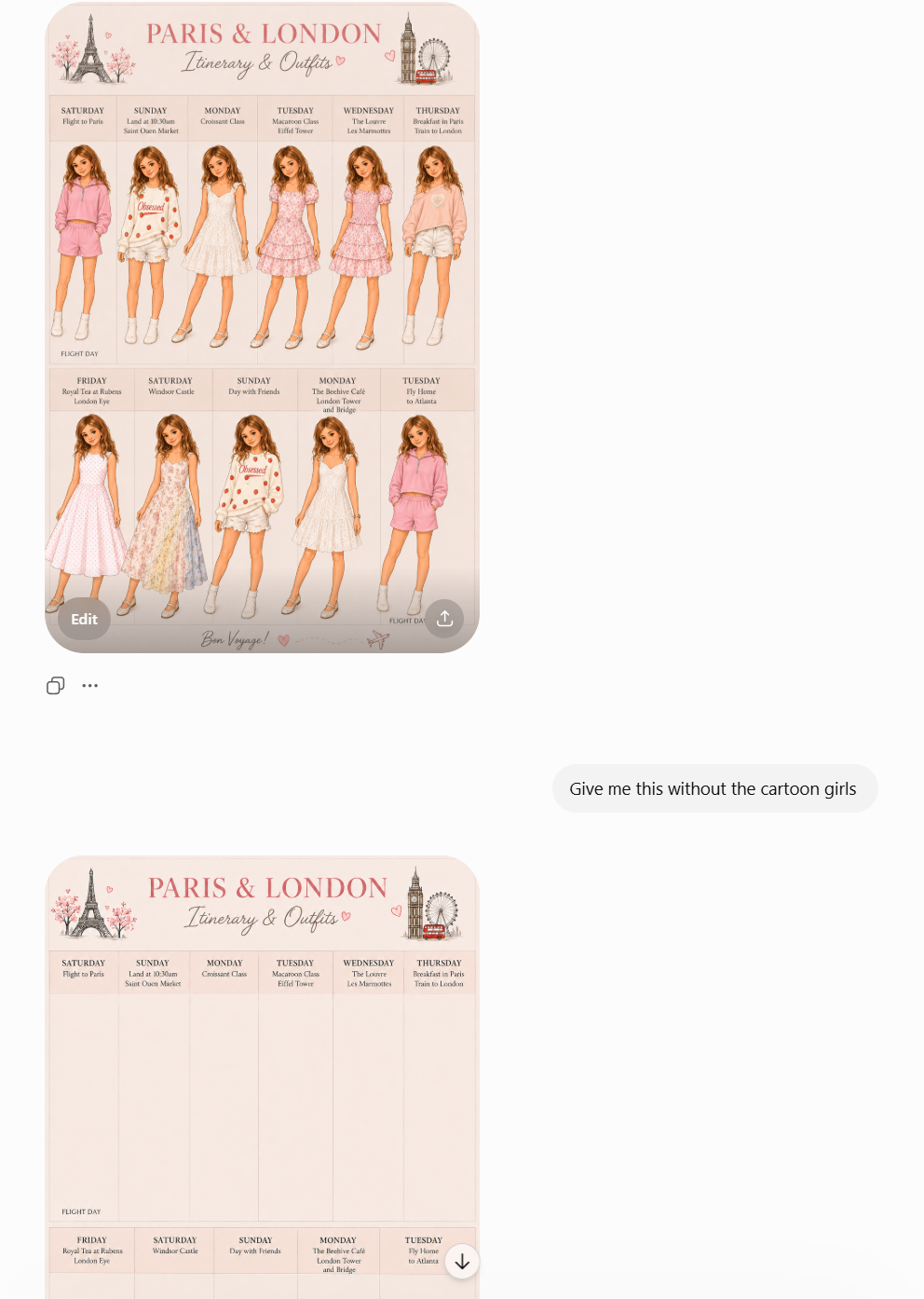
Instead of pulling random outfits and hoping for the best, we created a visual itinerary that paired each day of our trip with a specific outfit. Using ChatGPT, we matched outfits to activities such as our macaron or croissant-making class in Paris, visiting the Eiffel Tower, exploring the Louvre, enjoying afternoon tea in London, and wandering through Windsor Castle.
The goal wasn’t to create a rigid packing plan. It was to eliminate decision fatigue with a visual guide to help kids pack.
By assigning outfits to each day ahead of time, my daughter could see the entire trip laid out in front of her and know she had something cute, comfortable, and appropriate for every activity. Rather than staring at a suitcase and wondering what she would wear, she could picture herself throughout the adventure.
The visual format transformed packing from an overwhelming task into part of the excitement.
We also knew we’d have access to washers and dryers in both Paris and London, so there was no need to pack for every possible scenario. We intentionally repeated favorite pieces, planned to do laundry midway through the trip, and left room in the suitcase for something even more important: spontaneity.
By not overpacking, we created space for unexpected finds she might fall in love with during the trip. Whether it’s a sweater from a Paris market or a dress from a London boutique, those pieces become souvenirs with stories attached. By the end of the trip, she was happily wearing jean shorts with an Eiffel Tower sweatshirt she’d purchased while we were there.
The itinerary wasn’t a set of rules; it was simply a framework that made the choices feel manageable.
How We Created Our Visual Guide to Help Kids Pack
You don’t need design skills or expensive software to create one yourself.
Step 1: List Your Activities
Start by writing down the major activities planned for each day of your trip. Include travel days, sightseeing, special events, outdoor activities, and anything that might require specific clothing.
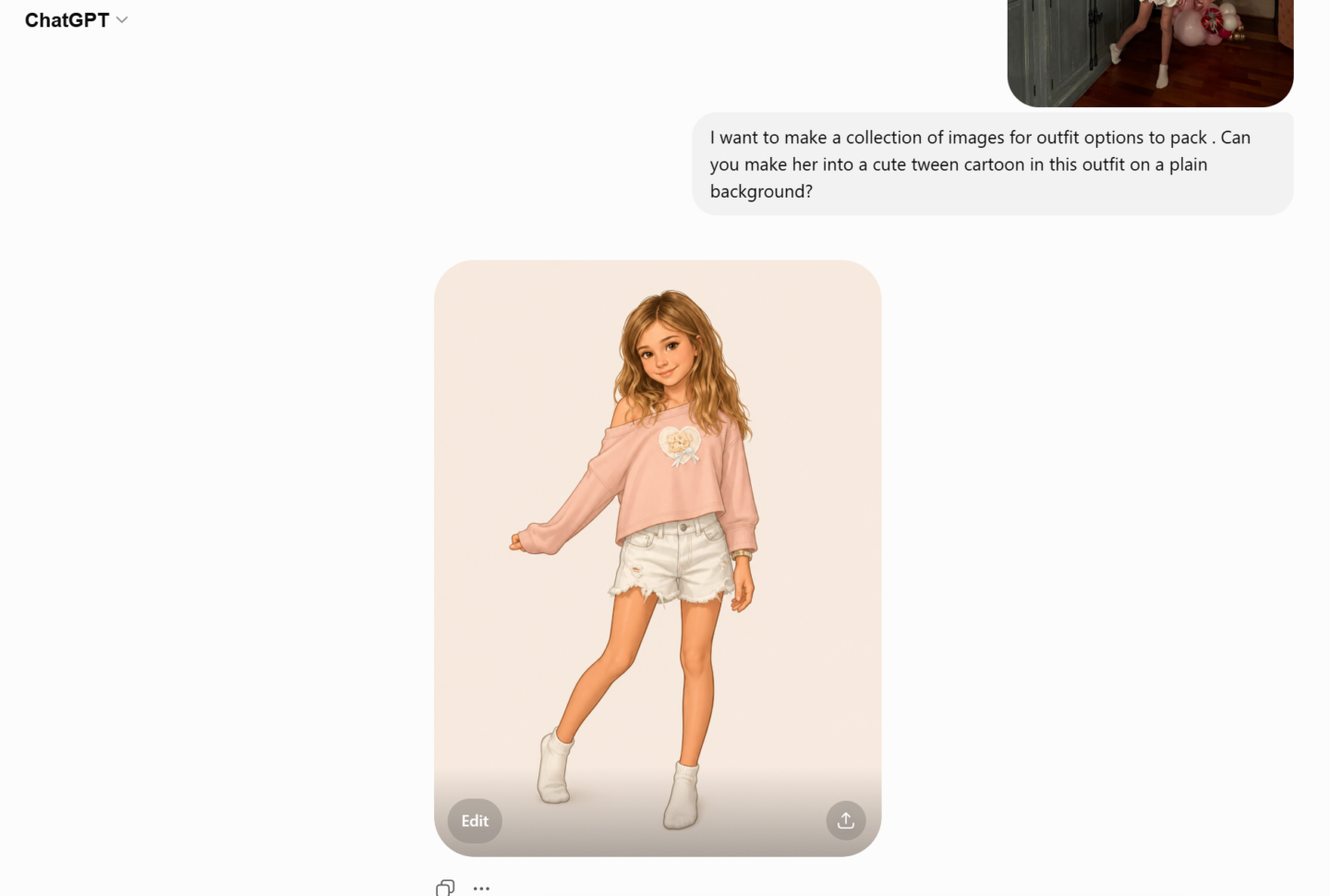
Step 2: Create a Digital Paper Doll
I uploaded a photo of my daughter to ChatGPT and asked it to create a cartoon version of her. This became our digital paper doll.
Step 3: Gather Outfits
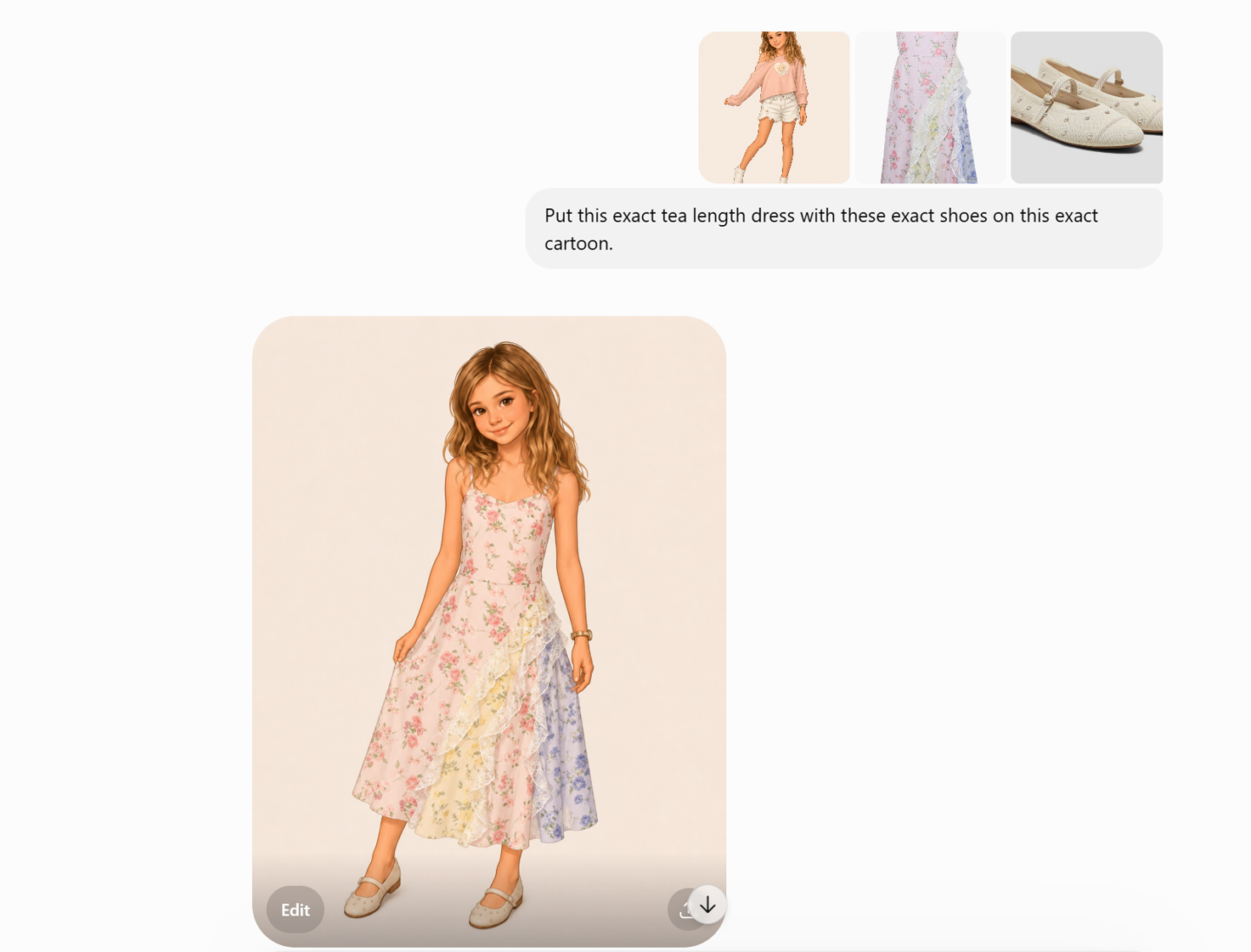
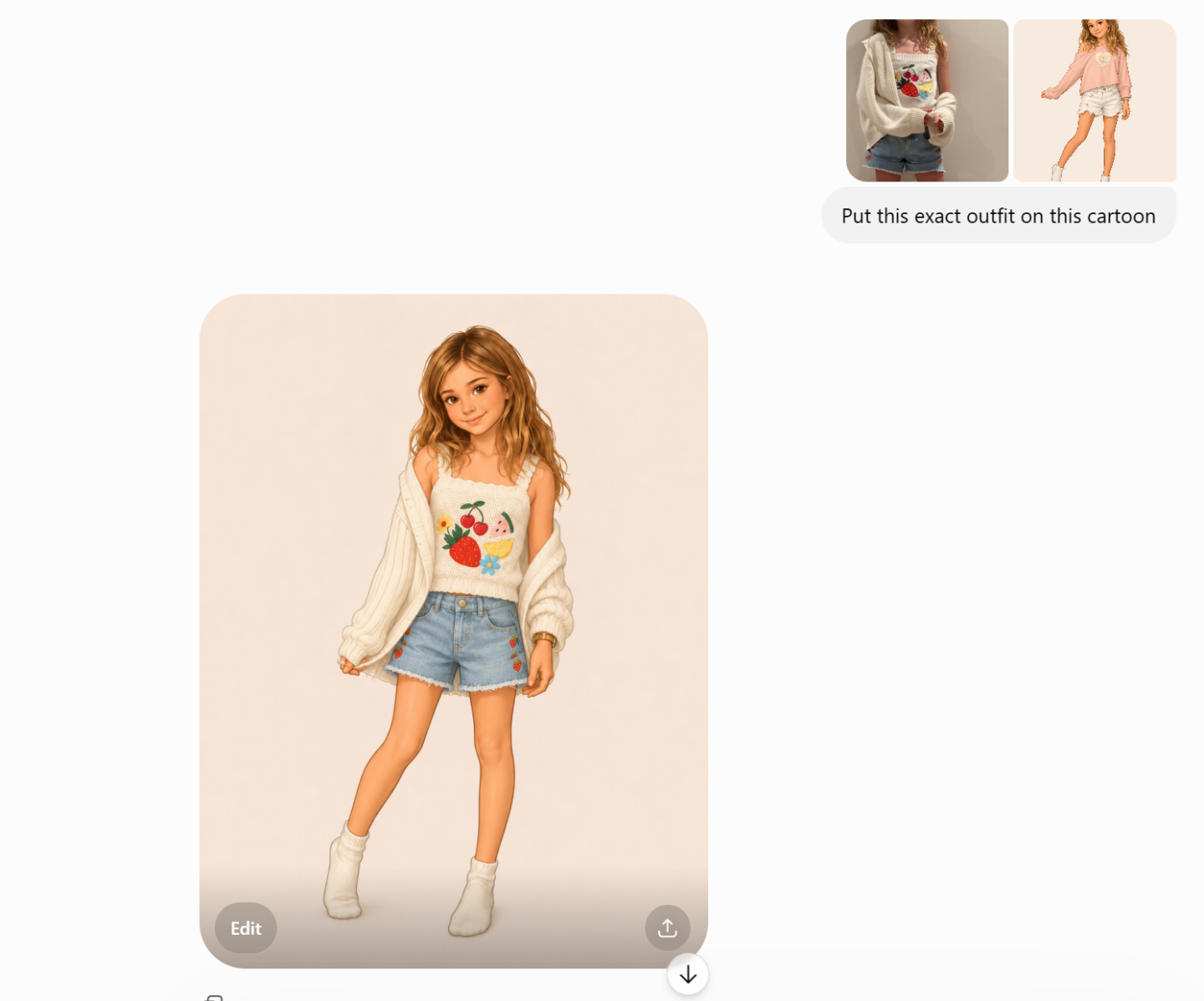
Next, I uploaded photos of her favorite outfits she already owned, along with links to clothing items. ChatGPT used those images to create outfit versions of the cartoon.
This was one of the most valuable parts of the process because my daughter could actively participate. She helped choose which outfits she wanted to wear, giving her a sense of ownership while keeping the number of decisions manageable.
Step 4: Build the Visual Schedule
Once we had selected the outfits, I uploaded our trip itinerary and asked ChatGPT to create a visual schedule.
After seeing the first version, my daughter wanted to make a few swaps. I asked ChatGPT for a blank itinerary background, uploaded everything into Canva, and rearranged the outfit illustrations until she was happy with the final plan.
Then I downloaded the image and sent it to her iPad.
This gave her independence during the packing process. She could pack in her room without me hovering over her, and she always had a visual reminder of what she’d planned for each day.
Why Visual Planning Works for Kids
Visual planning reduces cognitive load.
Instead of mentally juggling dozens of outfit combinations, kids can see the entire picture at once. The brain no longer has to repeatedly evaluate every possible option, which can be especially helpful for children who become overwhelmed by too many choices.
Think about being hungry at the grocery store. Most people would rather choose between three good options than sort through hundreds. Packing works the same way.
For children or adults who struggle with decision-making, the answer isn’t always more choices. Sometimes it’s creating a framework that makes those choices feel manageable.
Tips to Keep in Mind!
Plan for Laundry Access
If you’ll have access to a washer and dryer, take advantage of it. We had an Airbnb in Paris and were staying with friends in London. So we knew we could do laundry during our trip, which allowed us to pack fewer items and repeat favorite outfits. In the past, we have sent out minimal laundry at a hotel and even found a wash-and-fold near a restaurant reservation.
Leave Room for Flexibility and Fun Purchases!
One of the best parts of travel is finding something unexpected. By not filling every inch of the suitcase before we left, we had room for treasures discovered along the way. My older daughter wore the second half of the trip in an Eiffel Tower sweater, and my younger one bought a fancy dress in Paris that she immediately changed into and wore 1-2x more during the trip.
The itinerary was a guide, not a mandate. If they wanted to swap outfits or wear something new they bought during the trip, they could. The visual structure was there to reduce stress, not create new pressure.